Pro Tips
Sync Licensing Guide - How to get your music in Films, TV, & Games

Getting your music placed in films, TV shows, video games and commercials is one of the most impactful ways to grow your music career. Known as sync licensing, this strategy offers exposure to global audiences and income streams that go beyond streaming and sales.
In this complete but easy to read guide you will learn what sync licensing is, how to prepare your music, where to submit it and how tools like Bridge Sync are becoming essential for discoverability and sync placements.
What is Sync Licensing

Sync licensing or synchronization licensing refers to the legal process of placing music with visual media. When your music is matched with images in films, TV commercials, online videos or video games this is called a sync placement.
To legally earn from these uses you need permission from both the master rights owner (owns the recording of the song) and the publishing rights owner (owns the composition of the song).
Sync licensing includes placements in:
- Film & television
- Video games & mobile apps
- Commercials & branded content
- Trailers & promotional videos
- Online content on YouTube & social platforms
Why Sync Licensing matters in 2026
Traditional music revenue from album sales and downloads has declined while streaming payouts remain small for most artists. Sync placements provide:
- Upfront sync fees ranging from a few hundred to tens of thousands of dollars
- Performance royalties when the media airs publicly
- Massive exposure to new audiences in markets around the world
With competition for attention at an all time high artists need strategic approaches to stand out if they want placements for their music.
Step by step - how to get your music synced
1. Create sync ready music
Music supervisors look for tracks that can emotionally support visual storytelling. Create music that is:
- High quality professionally mixed and mastered
- Emotionally clear with identifiable mood and energy
- Tagged with strong descriptive metadata
- Available in instrumental versions and stems
Tracks with clean production and detailed metadata are much more likely to get noticed than tracks with incomplete information or unclear ownership.
2. Register your music
Before submitting your tracks for sync opportunities, make sure all the legal and administrative elements are in place:
- Clear ownership of both your master and publishing rights
- Registration with a performance rights organization (PRO)
- Accurate credits for songwriters, publishers, and rights holders
- Clear contact and licensing information
Having your music properly registered ensures you can be paid correctly and avoids delays or missed opportunities when a placement arises.
3. Optimize your music for discoverability
Once your music is registered and rights are clear, the next step is making sure people can actually find it. When music supervisors or producers are looking for tracks to place in a film, show, ad, or game, they don’t just randomly browse the internet.
Instead, they search through specialized music platforms or catalogs, like Bridge.audio sync marketplace, ”Bridge Sync”, or a music library.
These professionals are usually working with a tight brief. They’re searching for very specific things like:
- Mood (e.g. nostalgic, uplifting, tense)
- Genre or subgenre
- Instruments (e.g. piano-based, acoustic guitar, electronic)
- Tempo or energy level
- Vocal type (male/female/no vocal)
To help them find the right track quickly, these platforms rely on metadata, searchable tags that describe your music in detail. So when you create or upload your catalog to a platform, it’s essential that your tracks are:
- Properly tagged with accurate mood, genre, tempo, and instrumental info
- Search-optimized so they match real project briefs
Many platforms like Bridge.audio even offer AI-powered tools that analyze your music and auto-generate these tags. This not only saves you time but also ensures consistency and improves your chances of being discovered.
🔍 Check out this benchmark analysis comparing the Best AI Music Analysers on the market.
Bottom line: Even if your music is amazing, it won’t get placed if no one can find it. Discovery starts with data, and smart tagging is how you make your catalog visible in the right places, to the right people.
Where to pitch your music for sync
Music libraries & sync agencies
Music libraries like Bam Music, Musicbed and Artlist act as intermediaries between rights holders and content producers. Some allow open submissions and others are invite only.
Direct outreach to music supervisors
You’ve heard it said before: this is a people’s business. Building real relationships with music supervisors increases your chances of placements. Find supervisors working on projects you care about and send targeted pitches.
Self service sync platforms
Platforms like Bridge Sync make it easier for artists to present their catalog to supervisors and buyers.
Spotlight on Bridge Sync
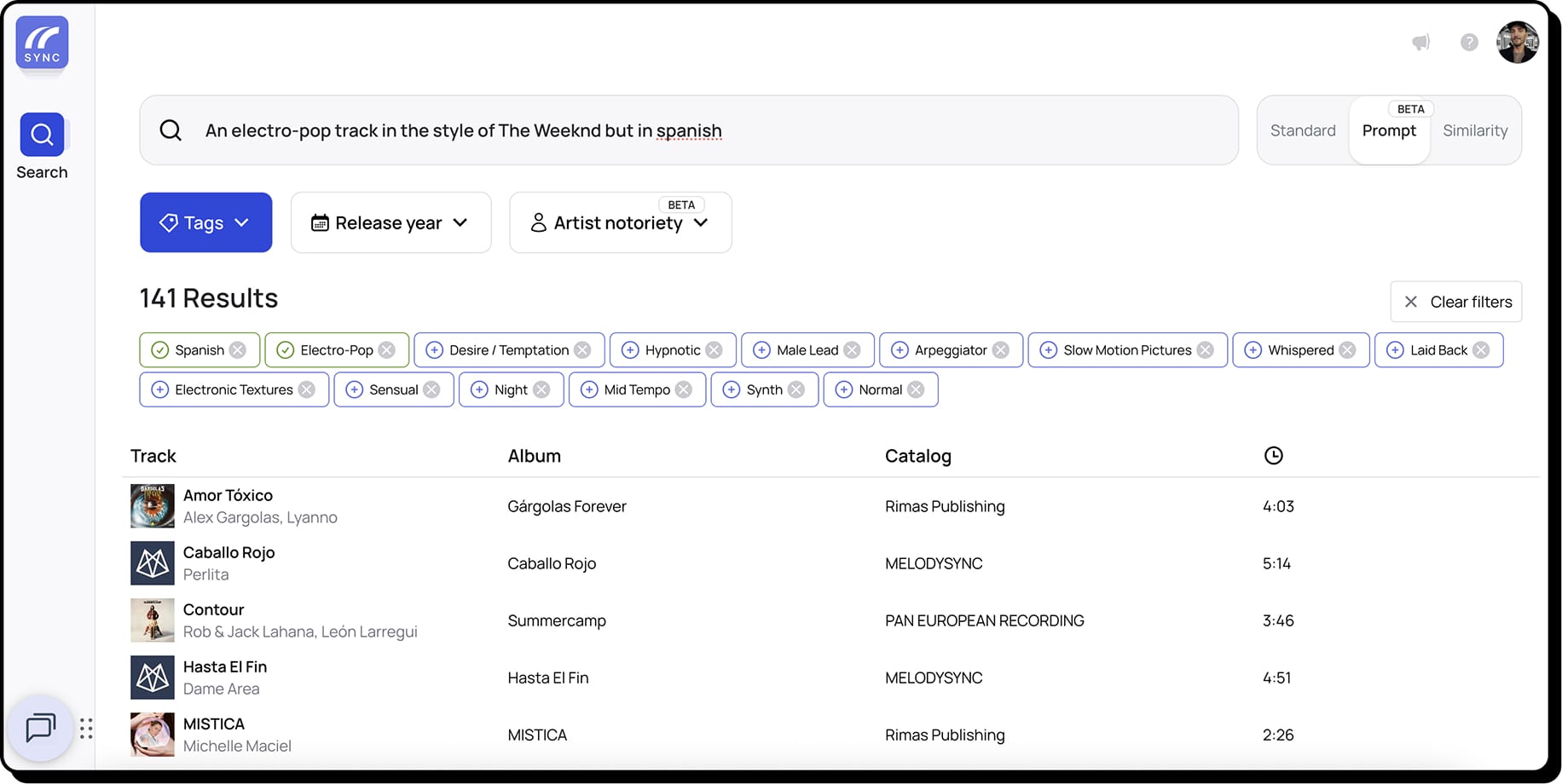
Bridge Sync is Bridge.audio specialized sync platform designed to help artists, labels and other rights holders get their music discovered for sync.
Here’s how it works:
- Create your pro account on Bridge.audio
- Upload your tracks to your personal Bridge workspace
- Let the AI automatically tag your tracks by genre, mood etc.
- Select & send your tracks to Bridge Sync
Once your tracks are available on Bridge Sync, Music Supervisors will be able to discover them if they meet their search criteria.
Conclusion: Sync Licensing is within reach
Sync licensing is a powerful opportunity for music creators who are prepared and organized. By making your music sync ready using professional metadata, adopting AI driven analysis tools and using platforms like Bridge Sync you can improve your chances of securing placements in film, TV video games and other media.
Whether you are an independent artist or part of a publishing team, the future of sync is about quality visibility and the ability to get your music in front of the right people at the right time. Platforms and technologies that enhance discoverability are now essential components of a modern sync strategy.