Pro Tips
How to get in impactful Spotify playlists in 2026
In 2026, landing a spot on a Spotify playlist remains a very effective way for independent artists to reach new listeners and grow their career. But as the platform evolves, so do the strategies for getting featured. With millions of tracks uploaded daily, artists need a smarter and precise approach to stand out.
From editorial playlists curated by Spotify’s in-house team to algorithmic recommendations and independent curators, each playlist type requires its own strategy. In this article, you’ll find our most recent insights to build a powerful playlisting strategy for 2026.
Understanding Spotify’s playlist ecosystem
There are 3 types of playlists on Spotify, and understanding how they work is the first step in establishing a playlisting strategy.
1. Editorial playlists
Editorial playlists are managed by Spotify’s own curators and include flagship lists like New Music Friday and RapCaviar. Getting placed in one of these can really boost your career.
To submit your track, use Spotify for Artists at least three weeks before release. Include detailed metadata (genre, mood, instruments) and write a concise, authentic pitch that captures your track’s story and vibe. Avoid generic bios or self-promotion, editors care about music that fits their playlist’s mood and sound.
2. Algorithmic playlists
Algorithmic playlists like Discover Weekly and Release Radar are personalized for each listener. You can’t pitch directly to them but instead, Spotify’s algorithm decides what appears based on listener engagement.
To trigger these playlists, focus on organic signals: listeners saving your track, adding it to personal playlists, playing it repeatedly, and sharing it. Consistent engagement tells Spotify your music has its audience, increasing your chances of algorithmic recommendations.
3. Independent playlists
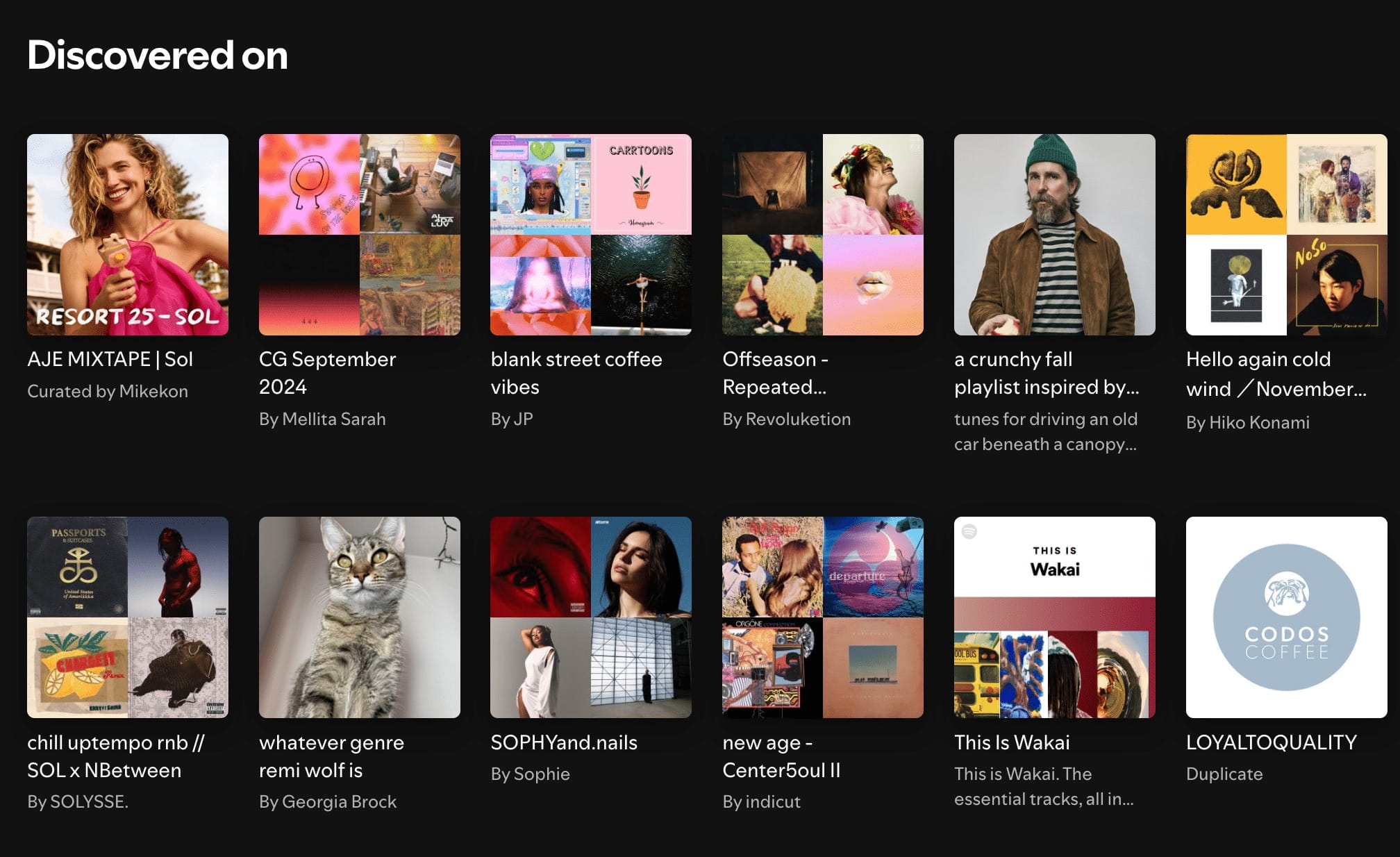
Independent playlists are curated by users, bloggers, influencers, and tastemakers. They may not have the massive reach of editorial playlists yet, but they offer accessibility and sometimes more niche exposure. In 2026, these playlists are more powerful than ever, especially for emerging artists.
Landing multiple independent placements can help your music gain traction and visibility, which in turn supports your chances with algorithmic and editorial playlists.
Prepare before you pitch
Before submitting your track anywhere, make sure your Spotify profile and release strategy are in top shape. Your artist page should look professional, complete with a verified profile, high-quality images, updated bio, and consistent branding.
Timing also plays a major role. Pitch your song through Spotify for Artists at least 3 to 4 weeks before release. That gives curators time to review it and increases your chances of selection. Use that window to build anticipation, share teasers, announce pre-saves, and encourage your fans to follow you - the more, the merrier!
Finally, remember that early engagement is key. Spotify’s algorithm values listener actions like saves, playlist adds, and replays. The more genuine interactions you drive within the first week, the better your track will perform across playlists.
Start with independent curators
Independent curators are your gateway into the playlist ecosystem. Unlike Spotify’s editorial team, they’re approachable and often eager to discover new artists.
Start by researching playlists that match your sound and audience. Look at where similar artists are being featured and analyze those playlists. Then, send personalized messages to their curators and mention why your song fits. Avoid sending the same generic message to dozens of curators, adapting your outreach will definitely increase your chances of placement.
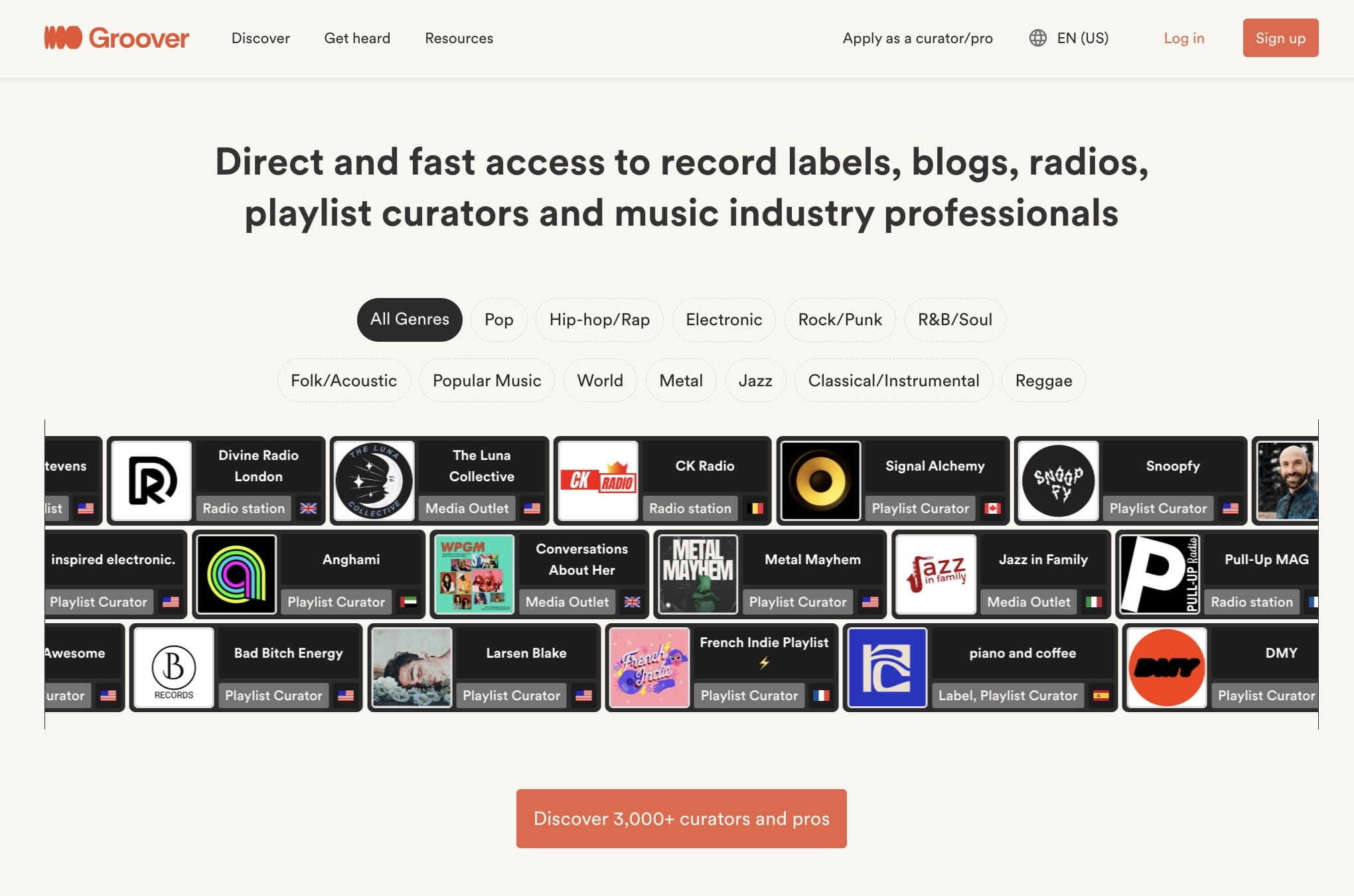
A tool that proves to be really helpful to contact curator is Groover, a platform that connects artists directly with verified playlist curators but also blogs, radio stations, record labels etc. On Groover, every submission guarantees a response within seven days, or your get back your credits. You can filter curators by genre, country, and playlist reach, ensuring your song lands in front of the relevant audience - it’s that easy!
Using Groover to target 40-50 well-targeted curators can lead to multiple authentic placements. Each playlist adds visibility and drives organic engagement, which is exactly what the Spotify algorithm loves.
Pitching to Spotify editorial playlists
Pitching your song through Spotify for Artists remains the only way to reach Spotify’s editorial curators directly. When filling out your submission, accuracy and clarity are key.
Describe your song’s genre, influences, and story in a way that helps editors understand its context. The 500-character limit means every word counts, focus on the track’s inspiration or mood, not just your personal achievements.
Submit your pitch at least seven days before release, though three weeks is better. A well-prepared pitch increases the chances that your song will be considered for an editorial feature, which can lead to many new listeners discovering your music.
Working with Spotify’s algorithm
In 2026, understanding Spotify’s algorithm is just as important as writing great music. The algorithm monitors how listeners interact with your track, whether they skip it, finish it, replay it, or add it to playlists.
Your goal is to send positive signals early on. Encourage fans to listen on release day, save your song, and share it. High engagement in the first 48 hours helps the algorithm recognize your track as valuable, potentially landing it in algorithmic playlists like Discover Weekly.
Avoid fake streams or paid “placement” scams. These can damage your profile and reduce your chances of appearing in genuine playlists. Authentic engagement remains the most powerful growth tool.
The 2026 playlist landscape: What’s changing
Playlisting trends are shifting toward niche and mood-based curation. Playlists built around activities, like studying, driving, relaxing, are outperforming broad genre lists. For artists, this means tagging your song accurately with mood and vibe metadata is more important than ever.
Curator transparency is also improving: Fake playlists are being removed, and Spotify now rewards curators who maintain real engagement. Artists are also encouraged to prioritize pitching to curators with active and engaged followers. Engagement also matters more than size. A playlist with 5,000 active listeners can outperform one with 50,000 inactive ones. Focus on consistent interaction, and you’ll see more long-term results.
👉 Discover how to also get on Apple Music playlists
Conclusion
Building an effective Spotify playlist strategy in 2026 isn’t about luck, it’s about preparation, authenticity, and consistency. Start with a professional profile, release your music strategically, and focus on organic engagement. Independent curators remain a key stepping stone to bigger opportunities. Pair that with smart use of platforms like Groover to reach verified curators, and your tracks can naturally climb from niche playlists to Spotify’s editorial and algorithmic selections.
In the end, success on Spotify comes from more than just one placement, it’s the result of steady, intentional growth built on real connections, quality music, and a strong playlisting strategy.